My attempt to add improvements to the original germanium Mosrite Fuzzrite, while keeping the core of the circuit unaffected.
By now most of us are familiar with the Fuzzrite, a unique late 60’s fuzz intended to compete with the Tone Bender and others of the era. It has a distinct sound, mainly due to its Depth control which blends the signal between the first and second transistor stages.
The rite FUZZ features the same spec (almost) transistors as the original. I say almost because I used 2N2614 transistors in the first stage, but they are interchangeable with the 2N2613. Both of them were spec’d and used in the Maestro FZ-1A. The second stage is the same 2N408. Both are NOS Solid State brand.
The Fuzzrite has the same issue as a lot of early fuzzes, which is very low input impedance, which makes them sound bad when not placed first in the signal chain. So for the rite Fuzz I adapted the buffer and pickup simulator section of the Benson Germanium Fuzz circuit to work with it, and made it switchable. Want to place it first in chain and load your guitar’s pickups? Keep it off. Want to place it further down the chain but still want it to play nice with everything else? Flip it on.
The second issue that plagues the Fuzzrite is the stinging high end. I have added a 3-way Hi Cut toggle to help tame this. Middle is off, down barely takes the edge off, and up is a more standard cut. I was going to use different value caps to make the the cuts more pronounced, but the values I used are the standard values used for Hi Cut in this circuit, so I kept them.
The third historical issue with the Fuzzrite is low output. For this I added a switchable output boost, but I think most of you won’t need it. I did not find it to have low output without it, except at a certain spot on the Depth knob, and the Boost could be useful in that position if it’s a tone you desire.
With the three toggles off, the circuit is the same as the original Fuzzrite.
The buffer/pickup sim and the boost both use NOS 2N5138 transistors, which are both low noise and a complementary of the germanium transistors.
Features:
NOS 2N2614 and 2N408 Solid State germanium transistors
NOS 2N5138 silicon transistors
NOS carbon comp resistors in the signal path
NOS Panasonic ECQ film caps
CK05 mil spec ceramic caps in voltage section
Internal power inverter to supply the transistors with the required -9V
Metal film resistors in the voltage section
Metallic clear coat powder coat paint
Lumberg DC jack
My attempt to add improvements to the original germanium Mosrite Fuzzrite, while keeping the core of the circuit unaffected.
By now most of us are familiar with the Fuzzrite, a unique late 60’s fuzz intended to compete with the Tone Bender and others of the era. It has a distinct sound, mainly due to its Depth control which blends the signal between the first and second transistor stages.
The rite FUZZ features the same spec (almost) transistors as the original. I say almost because I used 2N2614 transistors in the first stage, but they are interchangeable with the 2N2613. Both of them were spec’d and used in the Maestro FZ-1A. The second stage is the same 2N408. Both are NOS Solid State brand.
The Fuzzrite has the same issue as a lot of early fuzzes, which is very low input impedance, which makes them sound bad when not placed first in the signal chain. So for the rite Fuzz I adapted the buffer and pickup simulator section of the Benson Germanium Fuzz circuit to work with it, and made it switchable. Want to place it first in chain and load your guitar’s pickups? Keep it off. Want to place it further down the chain but still want it to play nice with everything else? Flip it on.
The second issue that plagues the Fuzzrite is the stinging high end. I have added a 3-way Hi Cut toggle to help tame this. Middle is off, down barely takes the edge off, and up is a more standard cut. I was going to use different value caps to make the the cuts more pronounced, but the values I used are the standard values used for Hi Cut in this circuit, so I kept them.
The third historical issue with the Fuzzrite is low output. For this I added a switchable output boost, but I think most of you won’t need it. I did not find it to have low output without it, except at a certain spot on the Depth knob, and the Boost could be useful in that position if it’s a tone you desire.
With the three toggles off, the circuit is the same as the original Fuzzrite.
The buffer/pickup sim and the boost both use NOS 2N5138 transistors, which are both low noise and a complementary of the germanium transistors.
Features:
NOS 2N2614 and 2N408 Solid State germanium transistors
NOS 2N5138 silicon transistors
NOS carbon comp resistors in the signal path
NOS Panasonic ECQ film caps
CK05 mil spec ceramic caps in voltage section
Internal power inverter to supply the transistors with the required -9V
Metal film resistors in the voltage section
Metallic clear coat powder coat paint
Lumberg DC jack

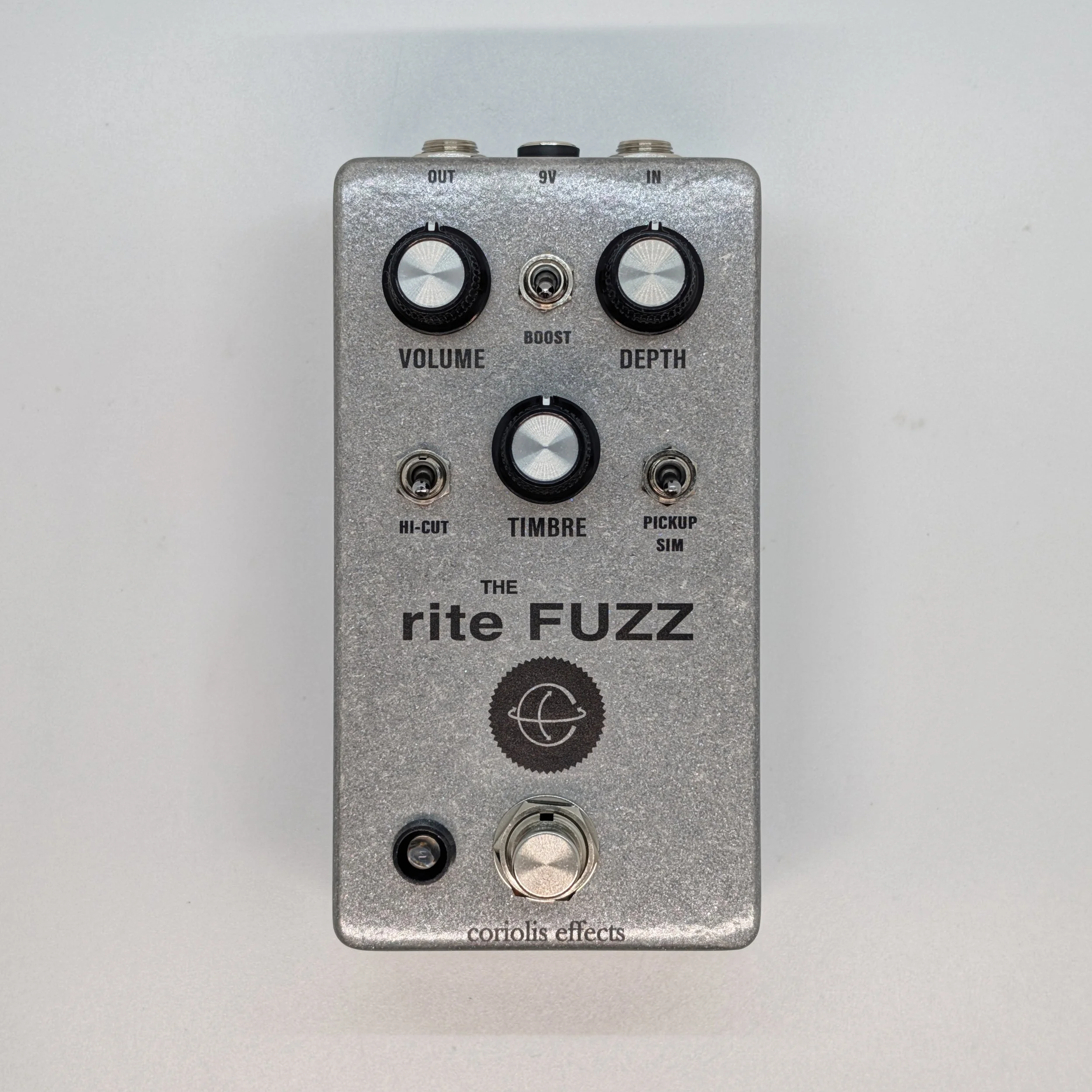 Image 1 of 8
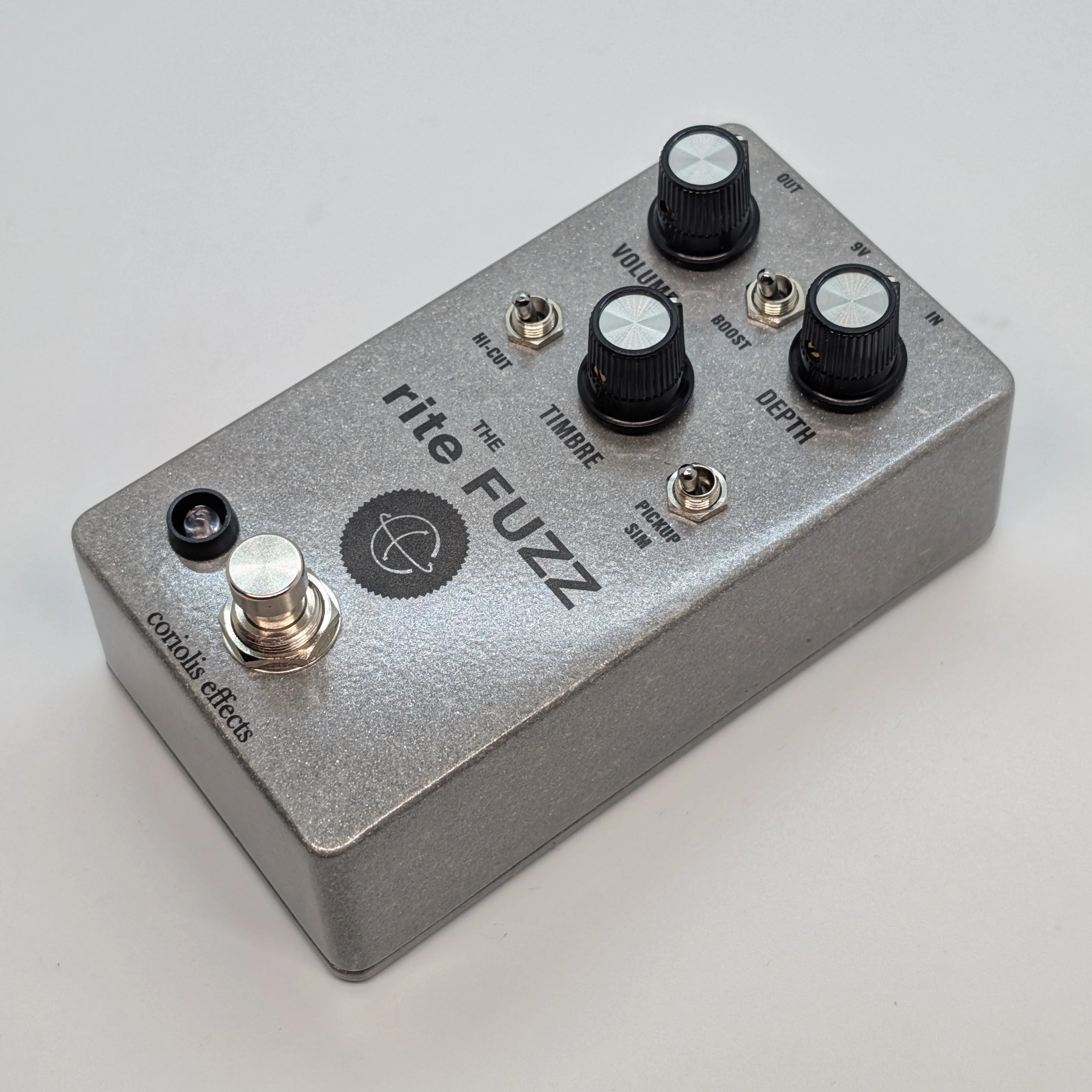 Image 2 of 8
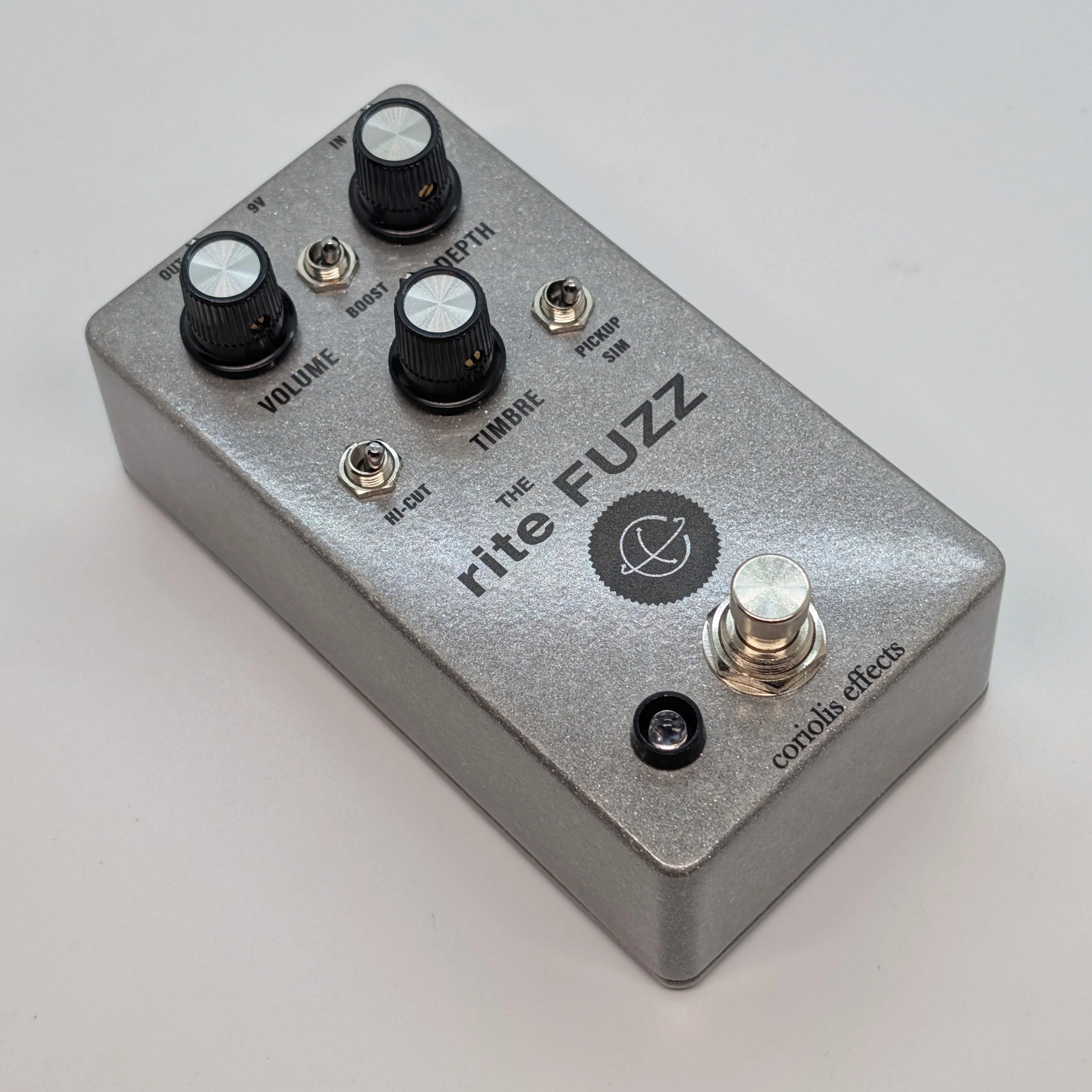 Image 3 of 8
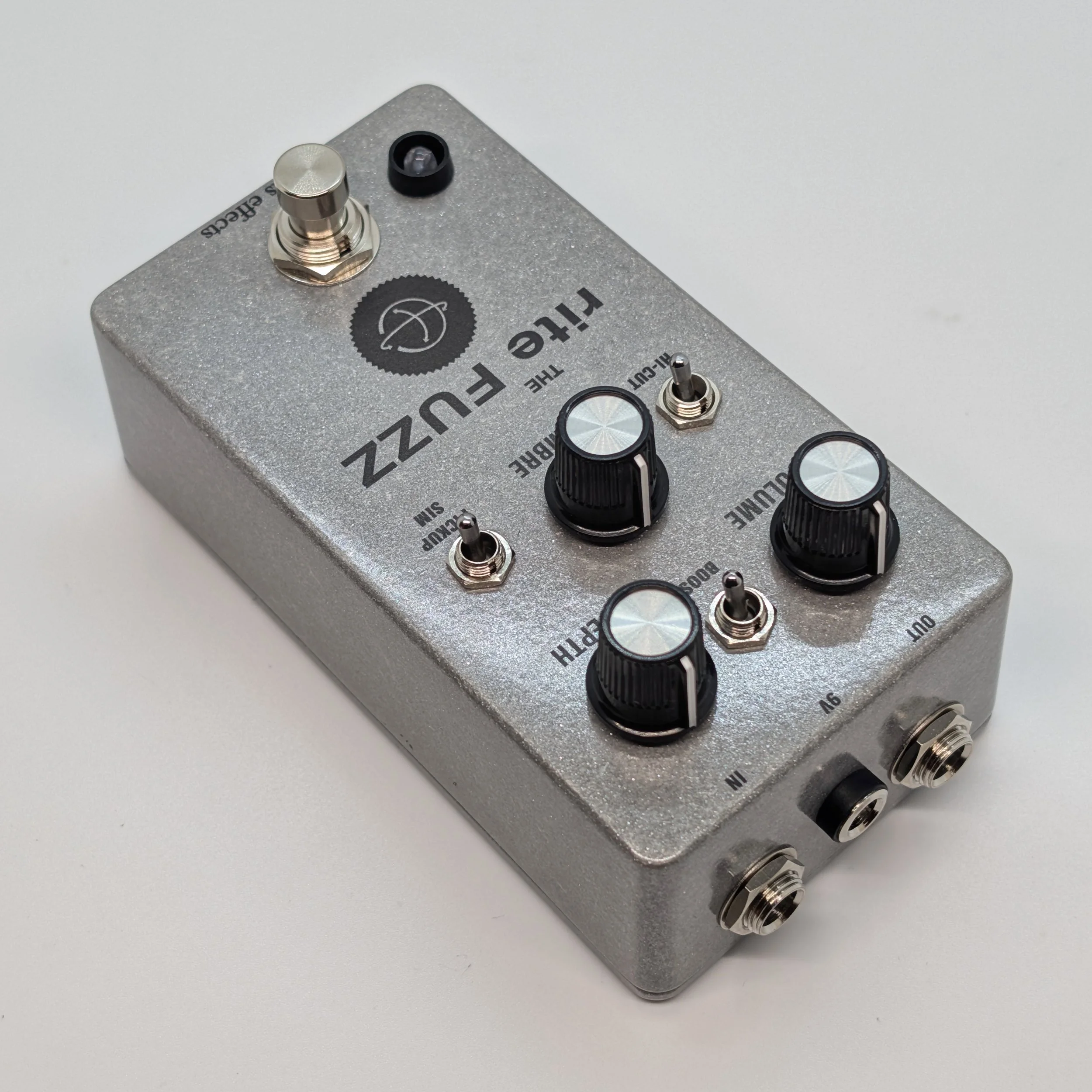 Image 4 of 8
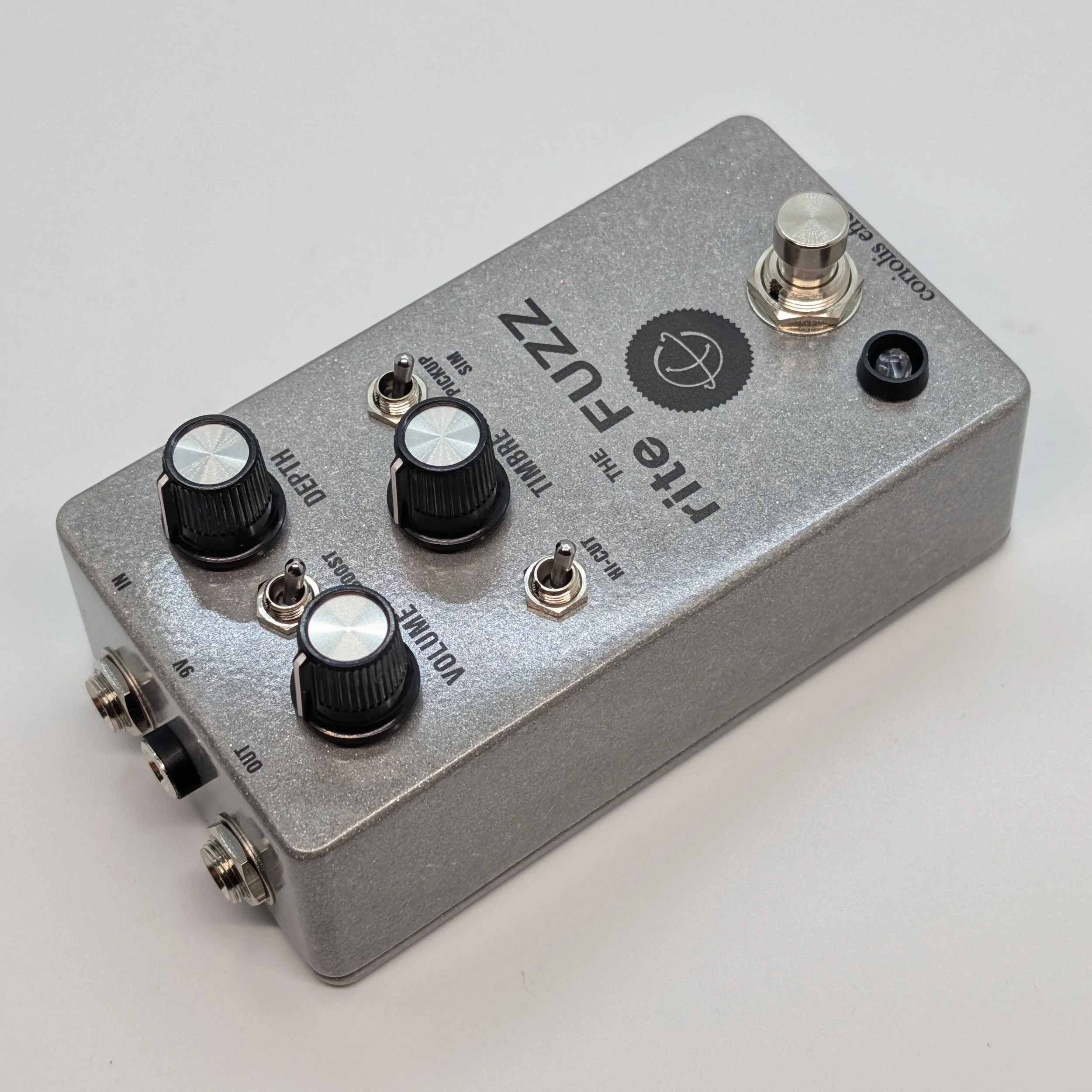 Image 5 of 8
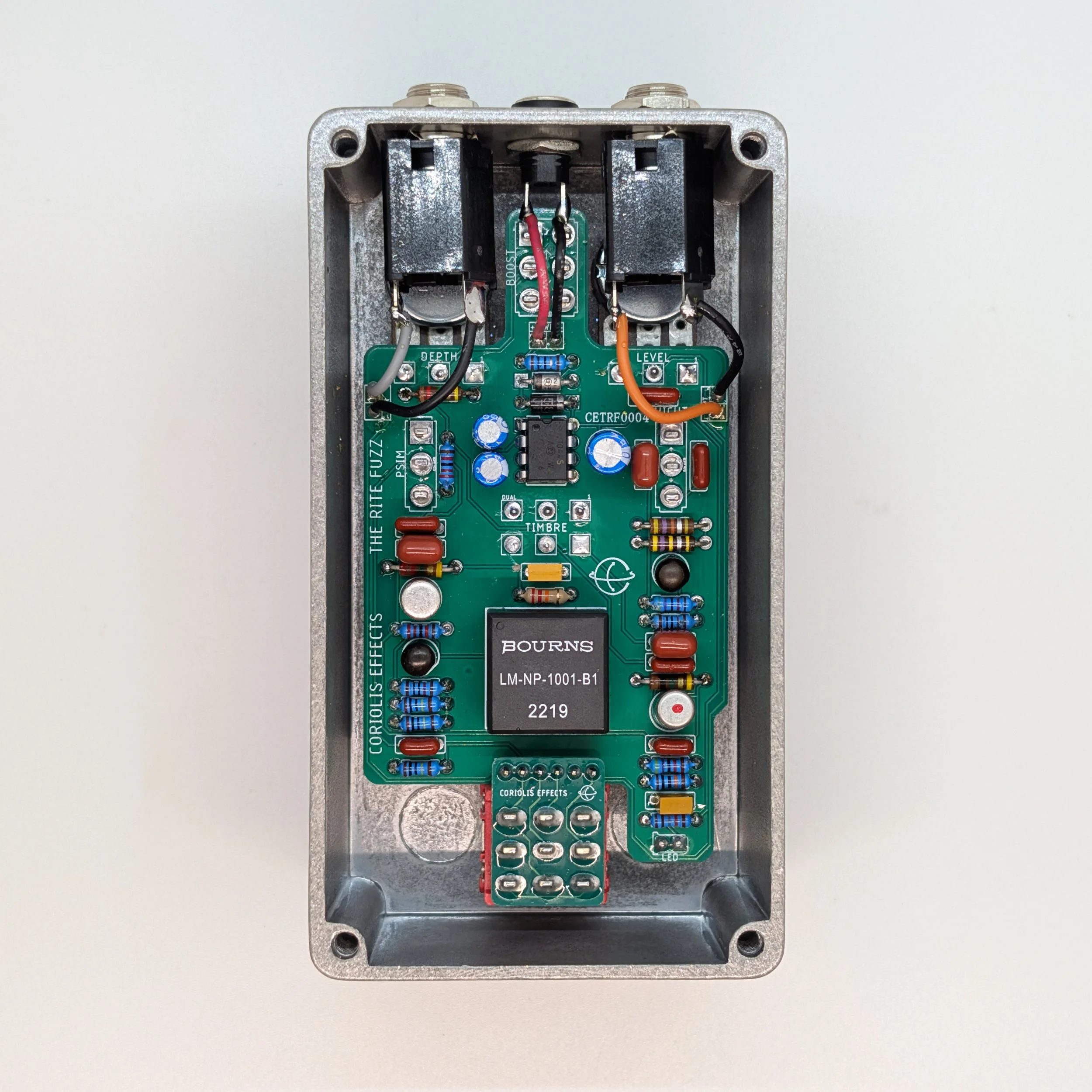 Image 6 of 8
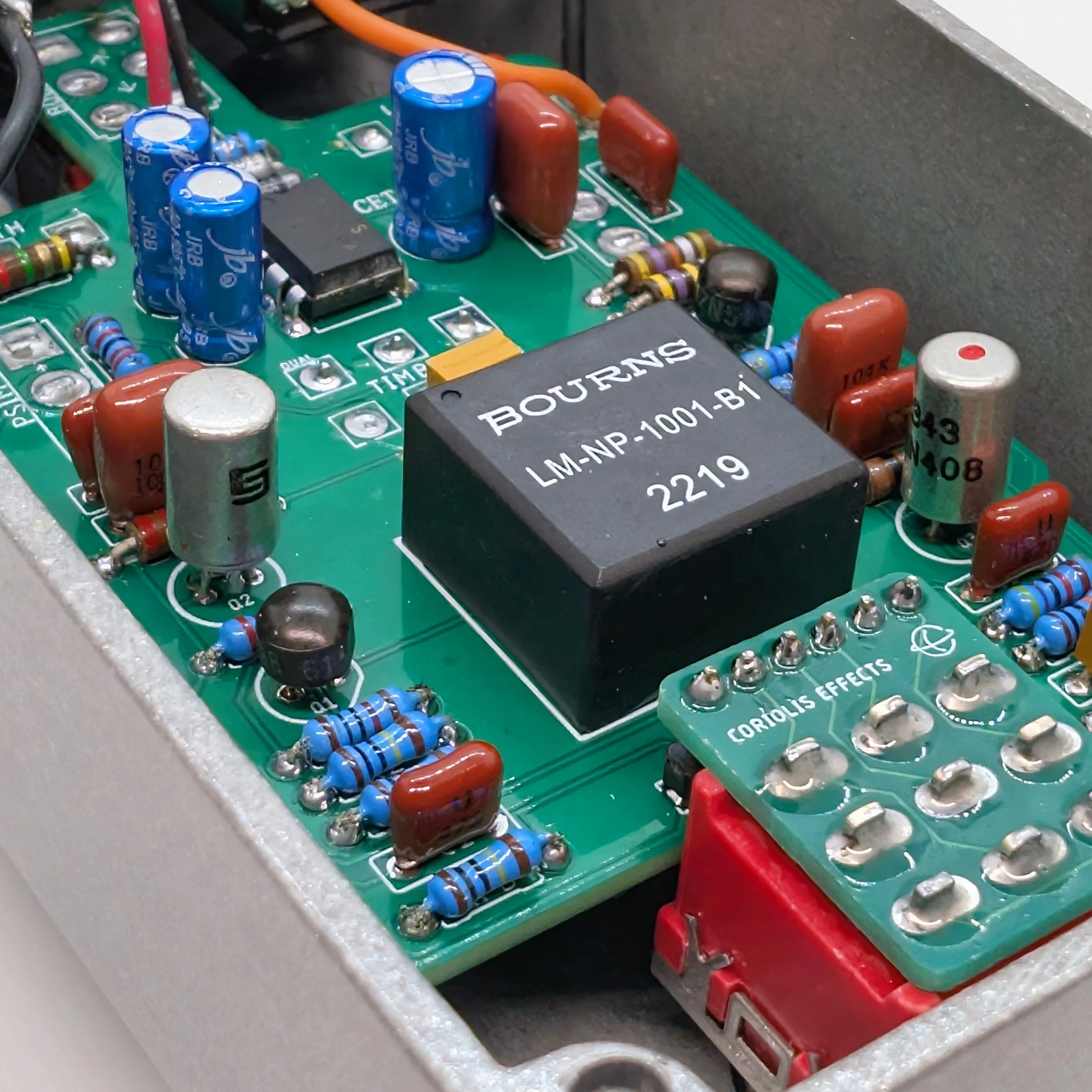 Image 7 of 8
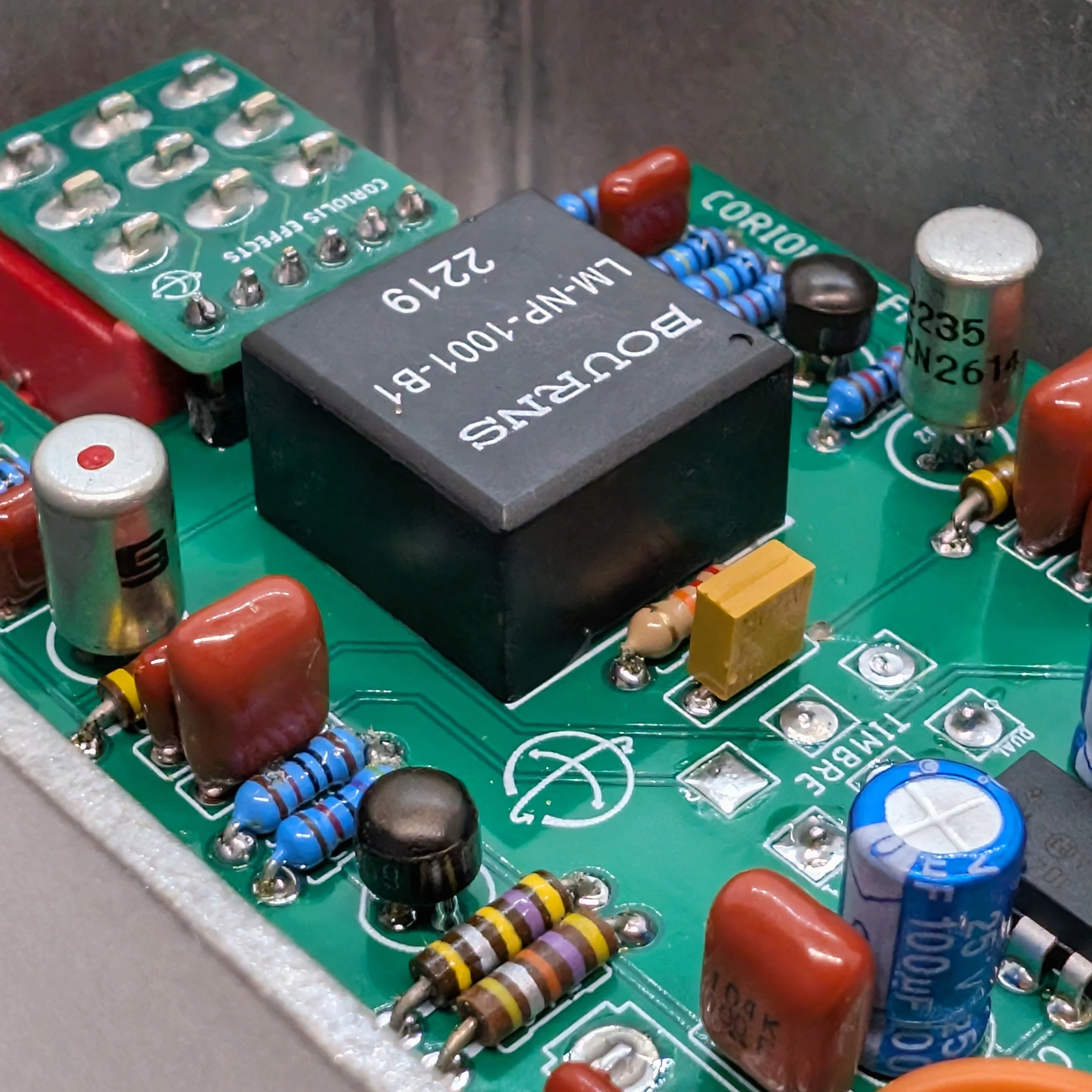 Image 8 of 8